

Organizers' Statement | Statement der Organisatoren | Gaza Biennale Berlin Pavilion
Perspective on the exhibition in Berlin | Perspektive auf die Ausstellung in Berlin
(deutsche Textversion siehe unten)
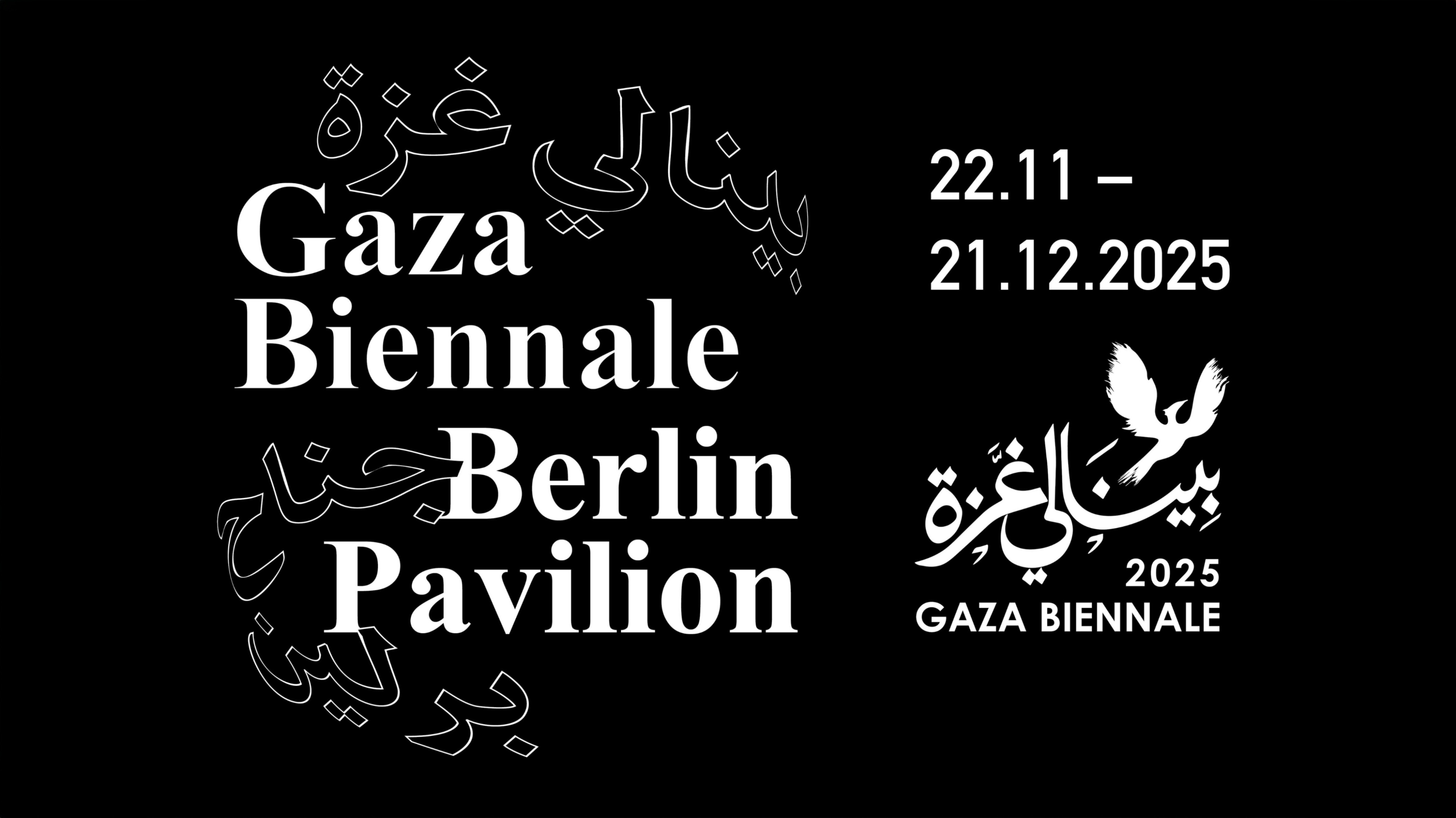
Gaza Biennale Berlin Pavilion Organizers’ Statement
The Gaza Biennale, an art project rooted in displacement, scatters like seeds around the world to create new hybrids. Through repetition and reproduction, artworks survive the destruction of a genocidal war machine and reappear by virtue of partnerships in different parts of the world. Pavilions, أجنحة “jinnah” (pavilions - wings - branches) have appeared in Padua, Edinburgh, London, Copenhagen, Valencia, Vallorcine, Dublin, New York, Walla Walla, Durban, Athens, Istanbul, Nazareth, Sarajevo, Tkaronto and now in Berlin. Sidelining territory, the Gaza Biennale expands through a human topography that cannot possibly be besieged.
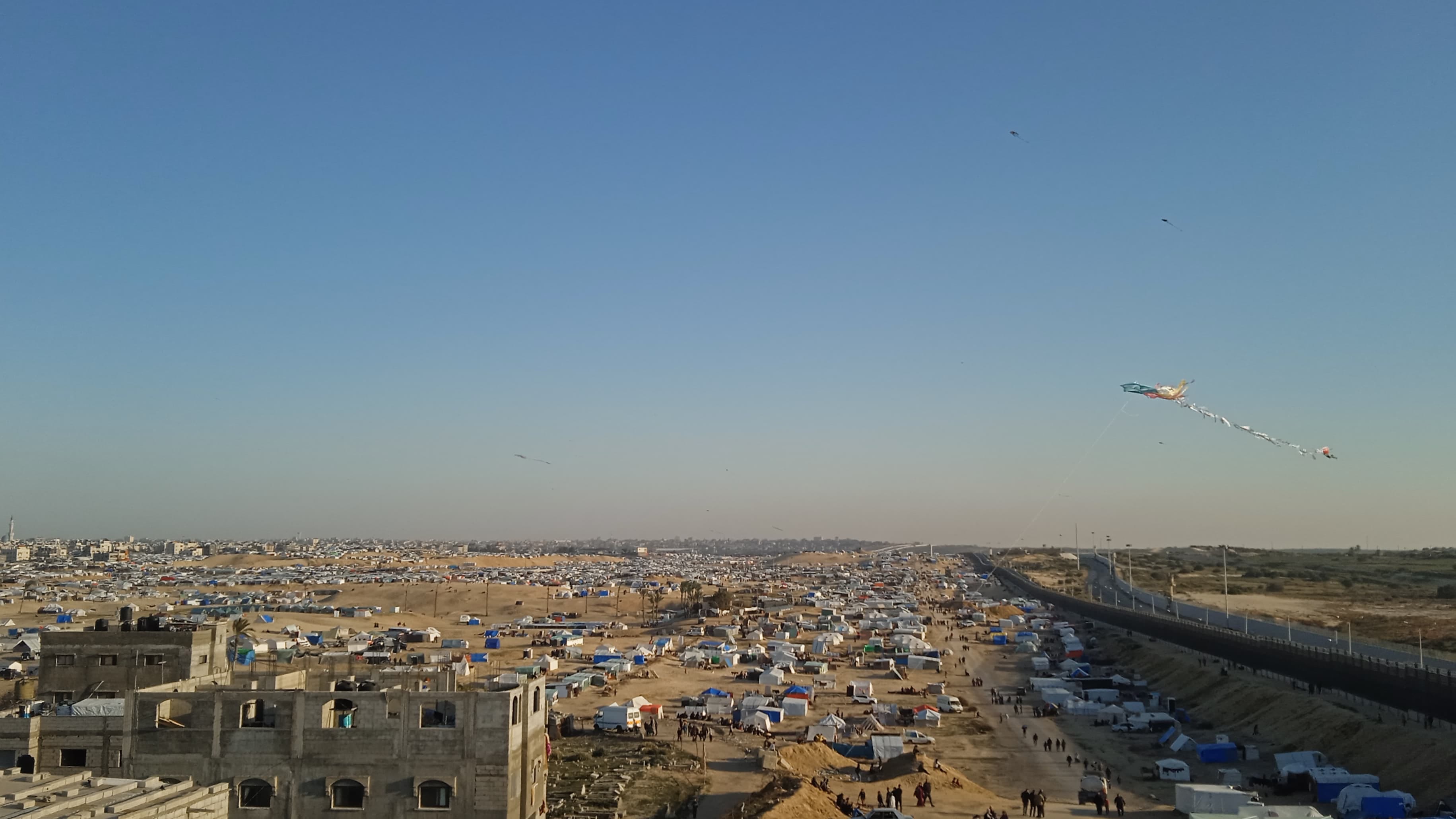
Defying genocide, Gazan artists have been creating and resisting endless displacements, bombs, and forced starvation through their art. Initiated by artists in Gaza in partnership with Al Risan Art Museum (The Forbidden Museum) in the West Bank, the Gaza Biennale carries Gaza’s voices beyond its borders. From Gaza today, amidst the ruins, a defiant people, displaced and deeply rooted in the land, its past, and its future, send a message out into the world.
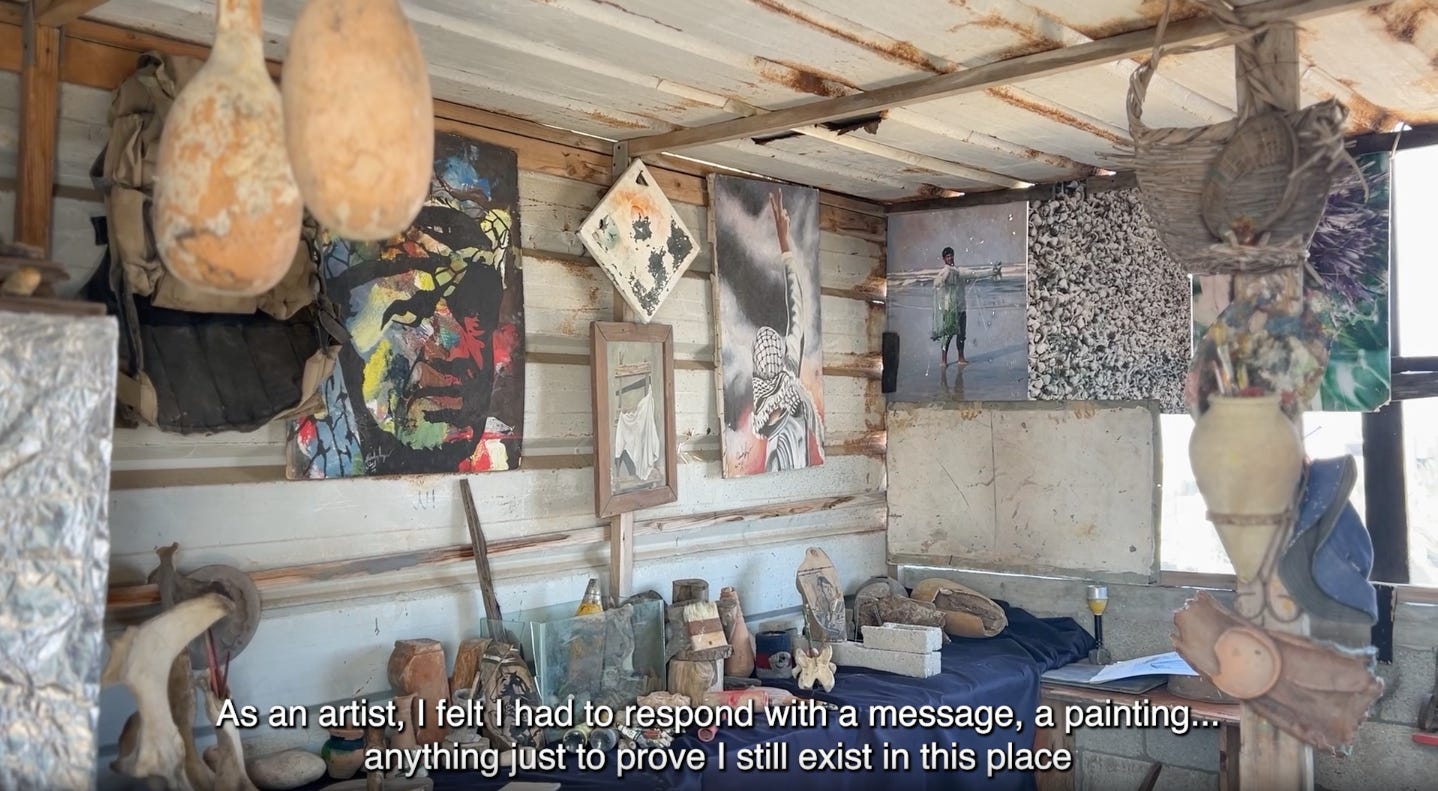
The work of over thirty of these artists is assembled in the Berlin Pavilion. Together, they confront the everyday realities of genocide, not only through narrative but also through material presence. Most of the works could not leave Gaza due to the ongoing Israeli occupation and genocide and were therefore recreated in collaboration with local artists—in Berlin and across the many Gaza Biennale Pavilions worldwide. In doing so, the artists transform their displacements into acts of multiplication.
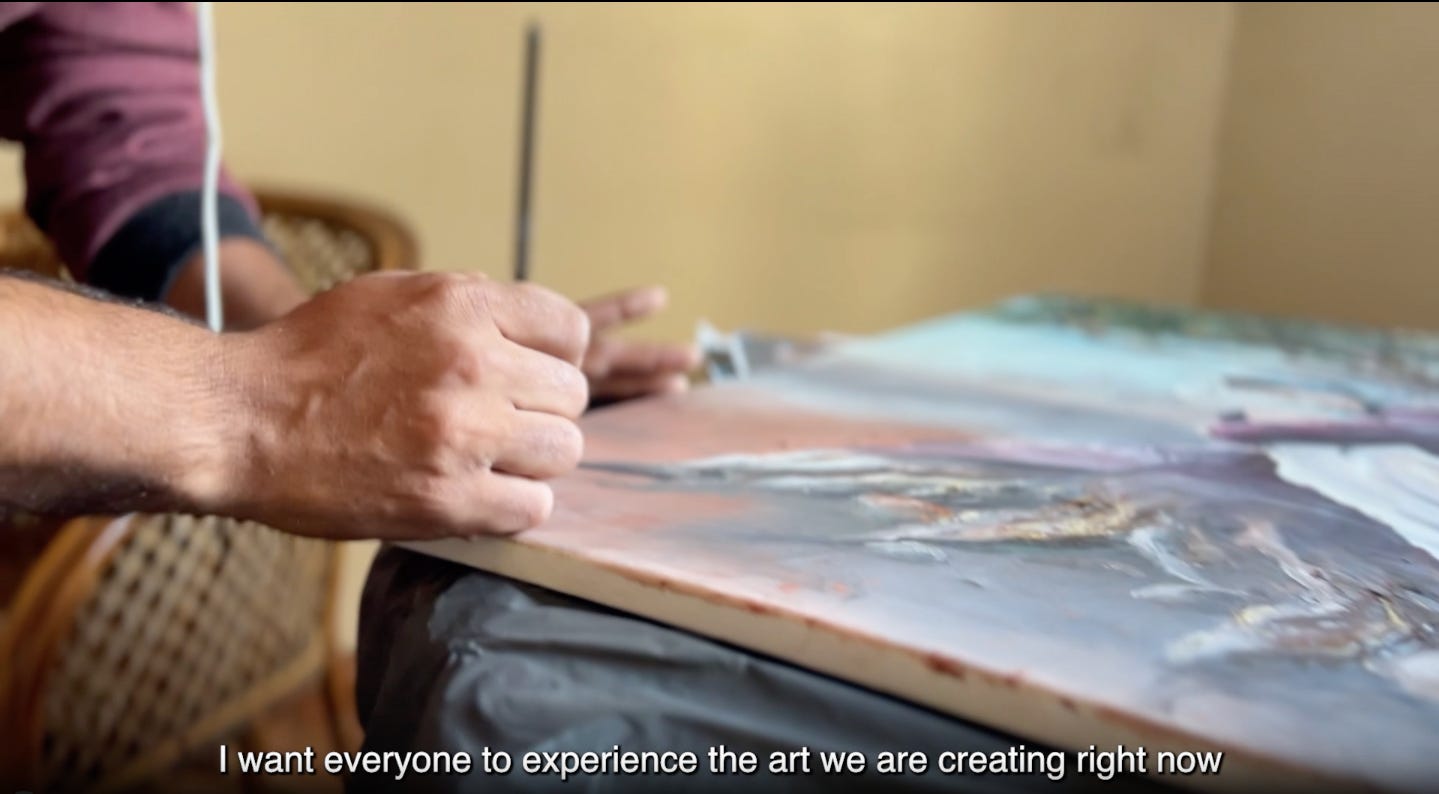
Taking inspiration from the initial act of scattering, the Berlin Pavilion itself radiates through networks of solidarity. This exhibition is the result of overwhelming popular support. It is realized solely through volunteer efforts and people’s engagement, exemplifying that collectivity can overcome repressive institutional structures.
The Berlin Pavilion unfolds with exhibitions at Flutgraben, AGIT, Khan Aljanub, Museum Called Baby and Alternatives Denkmal für Deutschland, and programs hosted at Galerie & Atelier Arabisk, Casino for Social Medicine, Spore Initiative and KM28 among others, and around the streets of Berlin. With a collaboratively curated public program, it invites people of all ages and backgrounds to join in these places; share joy and sorrow; and cultivate communal strength that will ultimately be the key to dismantling oppressive systems based on fragmentation and extractivism—structural relics that lie at the root of the occupation of Palestine and colonial violence worldwide.
The Berlin Pavilion seeks not to become a static exhibition but an evolving platform. Instead of lamenting the failure of official infrastructures, the Berlin Pavilion builds a new one: an infrastructure made from and by the community, small in its parts, and endlessly expansive in its unity.
At the center of all of this stands Palestine. The gravitational force that brought us all together – not just in this moment of time, but one that has done so for generations and will for generations to come. It is the artists in Gaza who lead the way for this unity with their courage, creativity, and endless will to flourish.
Statement der Organisatoren der Gaza Biennale Berlin Pavilion
Die Gaza Biennale, ein in Vertreibung verwurzeltes Kunstprojekt, verbreitet sich wie Samenkörner auf der ganzen Welt und erschafft neue Hybride. Durch Wiederholung und Reproduktion überleben Kunstwerke die Zerstörung durch eine genozidale Kriegsmaschine und tauchen Dank Partnerschaften in verschiedenen Teilen der Welt wieder auf. Pavillons der Gaza Biennale, أجنحة “jinnah” (Pavillons - Flügel) wurden bisher in Padua, Edinburgh, London, Kopenhagen, Valencia, Vallorcine, Dublin, New York, Walla Walla, Durban, Athen, Istanbul, Nazareth, Sarajevo, Tkaronto und nun in Berlin erschaffen. Die Gaza Biennale unterläuft Territorien und breitet sich über eine menschliche Topografie aus, die unmöglich belagert werden kann.
Künstler:innen in Gaza trotzen dem Völkermord und widersetzen sich endlosen Vertreibungen, Bomben und erzwungener Hungersnot mit ihrer Kunst. Die Gaza Biennale, von Künstler:innen aus Gaza in Zusammenarbeit mit dem Forbidden Museum (Jabal Al Risan, Palästina) ins Leben gerufen, trägt die Stimmen Gazas über seine Grenzen hinaus. Aus den Ruinen Gazas senden unbeugsame Menschen, vertrieben,doch tief verwurzelt in ihrem Land, in ihrer Vergangenheit und ihrer Zukunft, eine Botschaft in die Welt hinaus.
Im Berliner Pavillon sind die Arbeiten von über dreißig dieser Künstler:innen vereint. Allen gemein ist die Auseinandersetzung mit der alltäglichen Wirklichkeit des Genozids, nicht nur thematisch, sondern auch durch die materielle Präsenz der Arbeiten in Berlin. Die meisten Werke konnten Gaza aufgrund der anhaltenden israelischen Besetzung und des Genozids nicht verlassen und wurden daher in Zusammenarbeit mit lokalen Künstler:innen neu geschaffen, nicht nur hier in Berlin, sondern auch in den zahlreichen Gaza Biennale Pavillons weltweit. Dadurch verwandeln die Künstler:innen ihre Vertreibung in Akte der Vervielfältigung.
Der Berliner Pavillon lässt sich von diesem ersten Akt der Zerstreuung inspirieren und strahlt selbst durch lokale Solidaritätsnetzwerke aus. Die Ausstellung ist das Ergebnis überwältigender populärer Unterstützung. Ihre Realisierung basiert ausschließlich auf freiwilligem Engagement von Menschen und stellt damit unter Beweis, dass repressive institutionelle Strukturen durch kollektives Handeln überwunden werden können.
Der Berlin Pavilion entfaltet sich mit Ausstellungen im Flutgraben, Agit, Khan Aljanub, Museum Called Baby und Alternatives Denkmal für Deutschland, mit Programmen unter anderem in der Galerie & Atelier Arabisk, im Casino for Social Medicine, Spore Initiative und im KM28, sowie auf den Straßen Berlins. Mit einem gemeinsam kuratierten öffentlichen Programm lädt das Projekt Menschen jeden Alters und jeder Herkunft ein, Teil des Geschehens zu werden, sich zu versammeln, um zuzuhören, zu heilen und zu trauern, Freude und Schmerz zu teilen und eine kommunale Stärke zu entwickeln, die letztlich der Schlüssel zur Überwindung unterdrückerischer Systeme sein wird, die auf Fragmentierung und Ausbeutung basieren – strukturelle Relikte, die die Wurzel der Besetzung Palästinas und kolonialer Gewalt weltweit sind.
Der Berlin Pavilion möchte keine statische Ausstellung sein, sondern eine sich entwickelnde Plattform, die kontinuierlich seine eigenen Aktionen initiiert. Anstatt das Versagen offizieller Infrastrukturen zu beklagen, baut der Berlin Pavilion eine neue: eine Infrastruktur, die aus der Gemeinschaft heraus und von ihr geschaffen wird – klein in ihren Teilen und unendlich weitreichend in ihrer Einheit.
Im Zentrum all dessen steht Palästina: Die Gravitationskraft, die uns alle zusammenführt – nicht nur in diesem Moment, sondern seit Generationen und für Generationen, die noch kommen werden. Es sind die Künstler:innen in Gaza, die mit ihrem Mut, ihrer Kreativität und ihrem unermüdlichen Willen zum Aufblühen den Weg für diese Einheit ebnen.